
The Dining Room
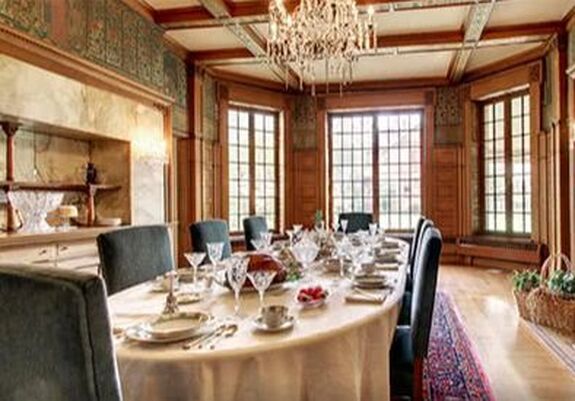
A dining room in an affluent 1890s Victorian home was designed as a high-stakes setting for entertaining, showcasing the family's wealth, taste, and knowledge of current trends through opulent, often dark, and highly decorated interiors. These rooms were frequently the center of public display for the lady of the house, where she would exhibit collections of china, silver, and crystal.
Key elements of an 1890s affluent dining room included a large, solid, and often dark wooden table, typically surrounded by six or eight, or more, heavily carved, high-back chairs with upholstered seats (often in leather, velvet, or brocade). This dining room table and the chairs are original to the mansion and were made in Chicago. A substantial sideboard, often with a large mirror, was a staple for displaying silver. The sideboard and fireplace mantle in the Newcomb-Stillwell dining room are quarter-sawn oak and Mexican onyx.
In the 1890s, lighting was often transitioning from gas to electricity, featuring ornate, heavy chandeliers, often in brass or wrought iron, with glass globes. Heavy, layered curtains (drapes) were common, using velvet or brocade fabrics, often with tassels and fringe, sometimes paired with lace panels. The two hanging tapestries were made from the curtains that used to hang in this dining room. In 1916, Elizabeth Stillwell converted the combination gas/electric chandeliers to all electric and replaced the stained-glass windows with French doors. The sconces in use now are Waterford, but an original sconce is on display on the second floor. Elizabeth also added the frieze which represents a medieval wedding; it is all hand painted onto canvas and glued to the wall.
The overall atmosphere was meant to be one of dignified comfort with thick, patterned textures and dark colors creating a quiet, opulent environment suitable for long, multi-course meals.
The lead crystal punch bowl on the sideboard was a wedding gift to Richard and Anna Newcomb.