
The Study
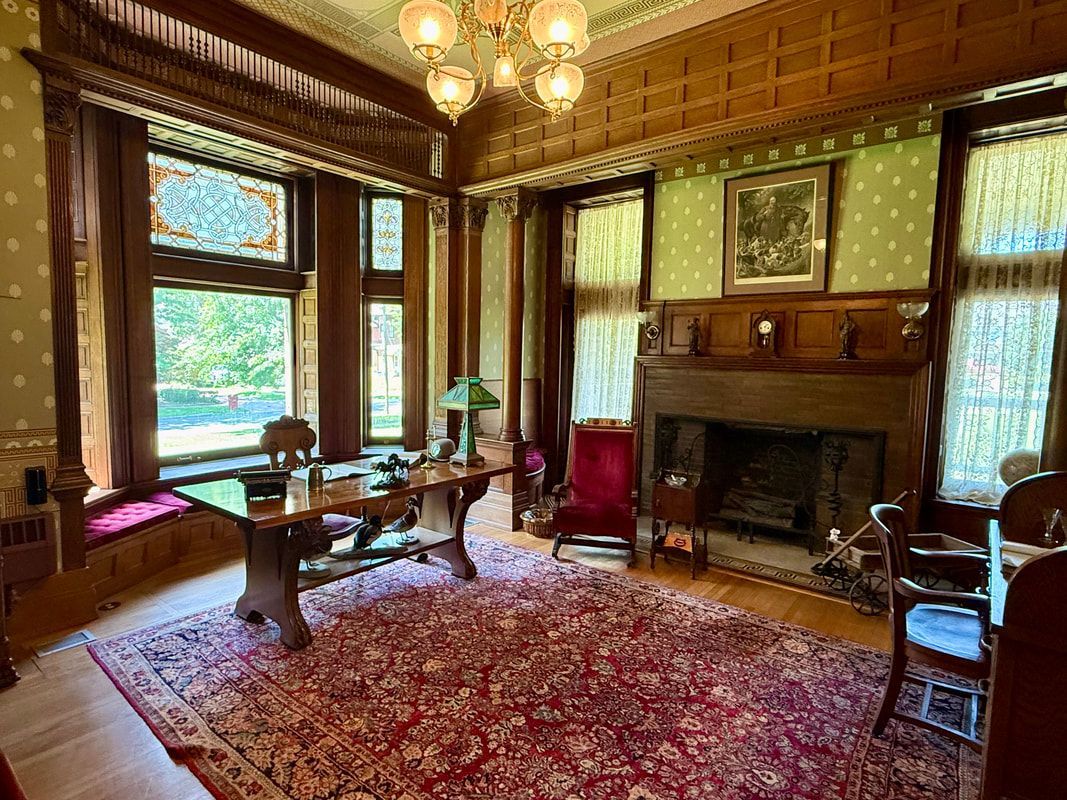
In the1890s, a wealthy man's study was a private, opulent sanctuary reflecting
immense wealth, designed for masculine pursuits, business, and leisure. Typical features included dark wood paneling, heavy velvet curtains, leather-bound books, ornate fireplaces, leather armchairs, and displayed collections of art or artifacts. Dark, rich wood trim and paneling were popular, often accompanied by dark wallpaper or painted walls. Heavy, luxurious fabrics like velvet and damask were used for drapery. Mr. Newcomb’s study features quarter sawn oak with ornate columns framing the fireplace, and intricate spindles suspended over the bay window.
Mr. Newcomb’s study originally had curtains in front of the bay window, the hardware is still present, and across the pocket doors. Typically, a large, solid oak or mahogany desk was the centerpiece. Comfort was key, with sofas and armchairs.
Low, warm lighting was provided by oil lamps and gas lighting, as evidenced by the two sconces on either side of the fireplace; the intent was to create a moody, private atmosphere. Fireplaces were central to the room. In 1916, Elizabeth Stillwell, eldest daughter of Richard and Anna Newcomb, and her husband, John Stillwell, the current occupants, converted the combination gas/electric light fixtures, to all electric.
This was a space for the "master of the house" to conduct business, smoke, read, and house private collections (books, taxidermy, or art).